
This website uses cookies for marketing purposes. You decide whether to give your consent. Learn more in our Privacy Policy.
In our 6-week program, you’ll learn to recognize and change your relationship patterns and build genuine connection. Developed by psychologists.









Most people think: “To feel less lonely, I just need to meet more people.”
So they join clubs. Swipe through dating apps. Endure networking events.
Always new faces, yet the feeling of loneliness stays.
Why?
Because you believe loneliness comes from the outside. But it actually starts within.
Studies show that more social contacts don’t automatically mean less loneliness [1] [2].
You can go to 10 parties a month and still feel empty.
You can have 200 contacts in your phone and no one to truly talk to.
Loneliness stems from ingrained patterns of thought and behavior that sabotage you from the inside.
Only when you create space for closeness can real relationships grow.
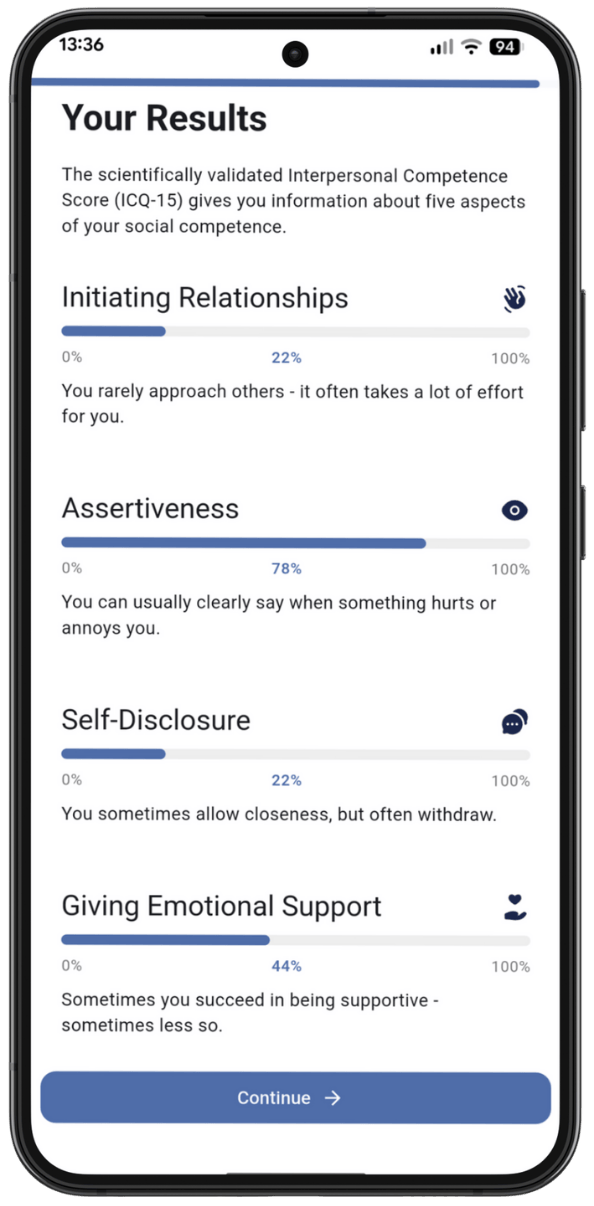
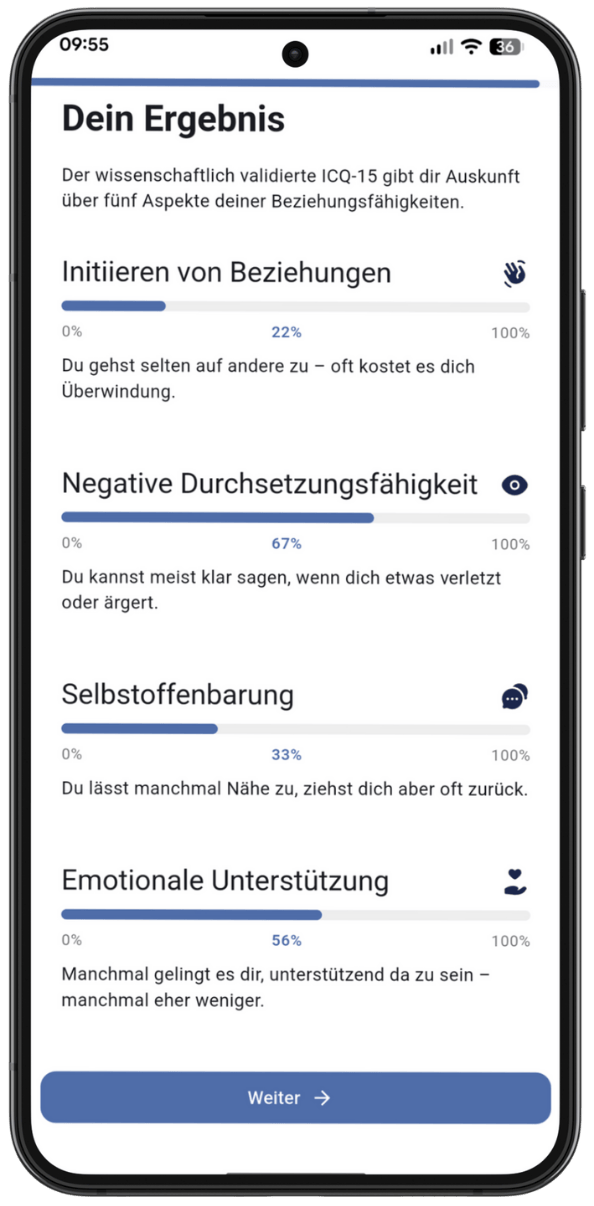
And that’s exactly what platoniq does in just 3–5 minutes a day, all in one app through three interlocking pillars.

Discover what truly drives closeness, trust, and connection. How do deep relationships form? What holds them together?


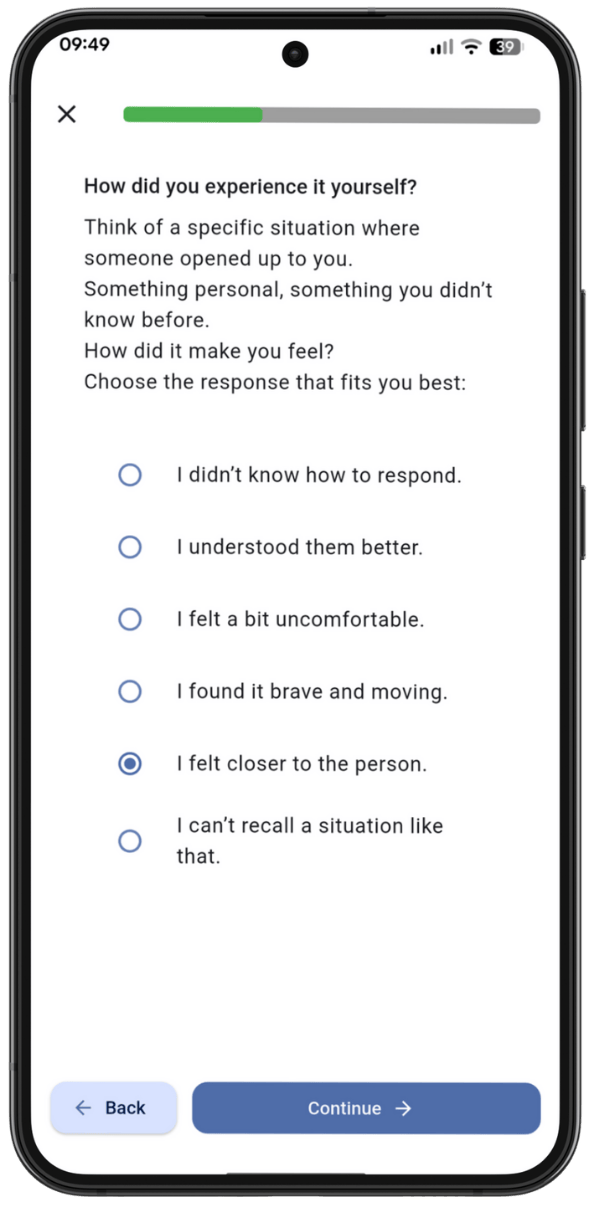
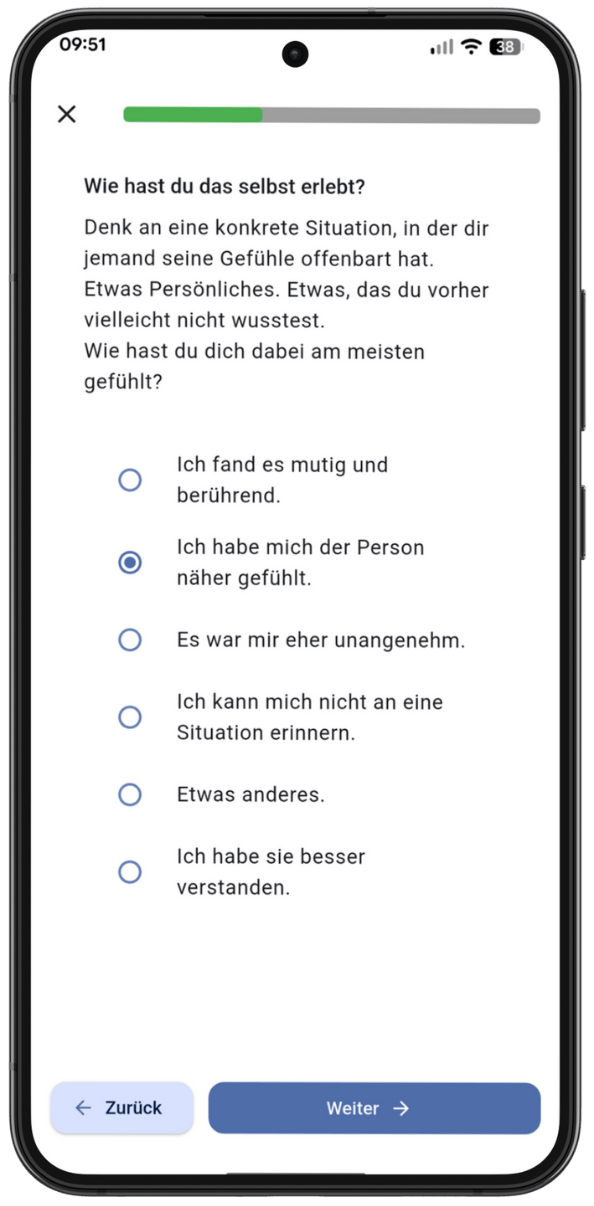
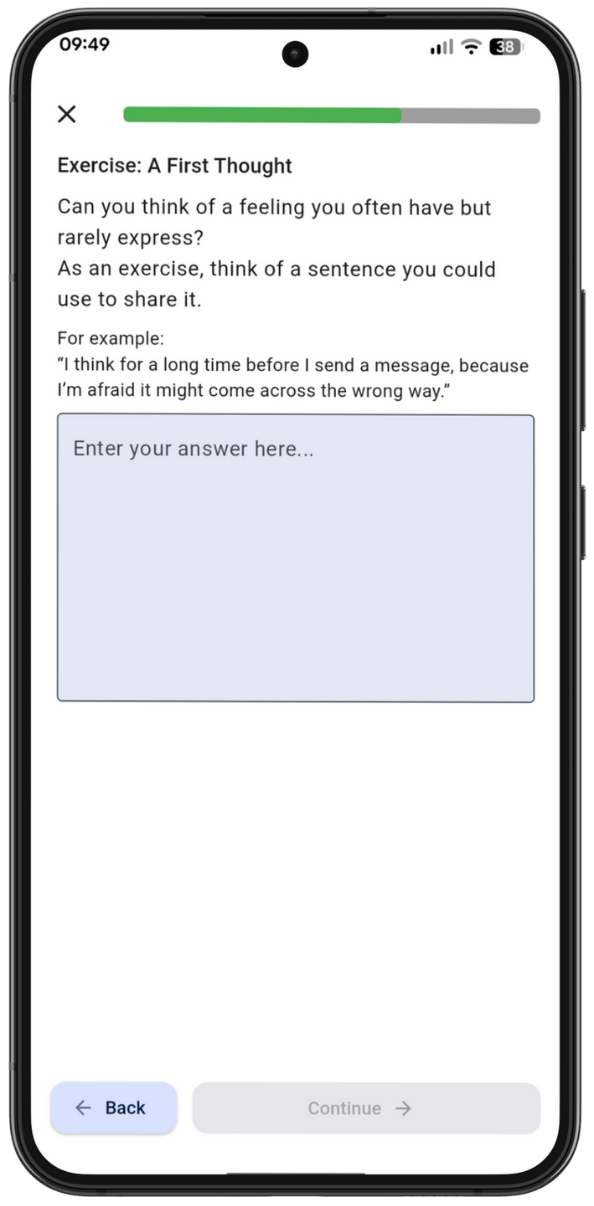
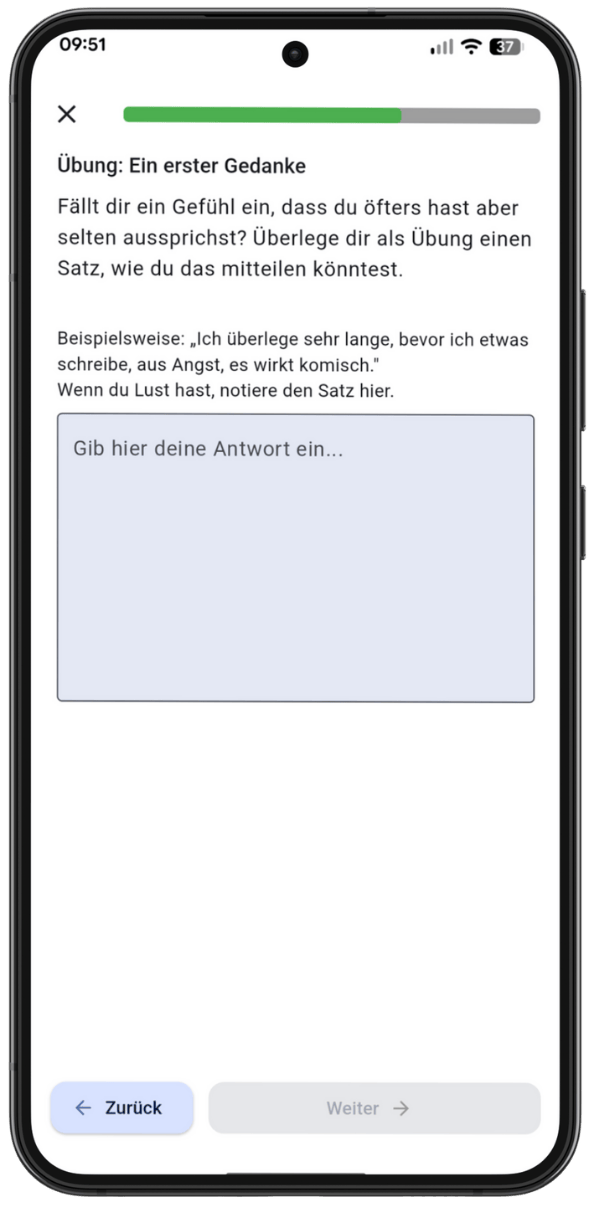
Through guided reflection exercises, you question your inner beliefs. You’ll see: What’s holding me back? What needs to change? And where do I start?
Practical everyday challenges turn theory into action. Take small, safe steps from giving an authentic compliment to setting healthy boundaries.



Many emotions don’t arise from situations themselves, but from the thoughts behind them.
When you think, “I’m not interesting,” you automatically feel insecure and withdraw.
This is exactly where cognitive restructuring comes in — a proven method from behavioral therapy.
It helps you question those thoughts: “Is this really true? Or just an old pattern?”
It sounds simple. But it isn’t.
These thought patterns are deeply rooted often since childhood or formed by painful experiences.
That’s why you need a system that guides you step by step.
platoniq integrates this scientifically proven method into your daily life.
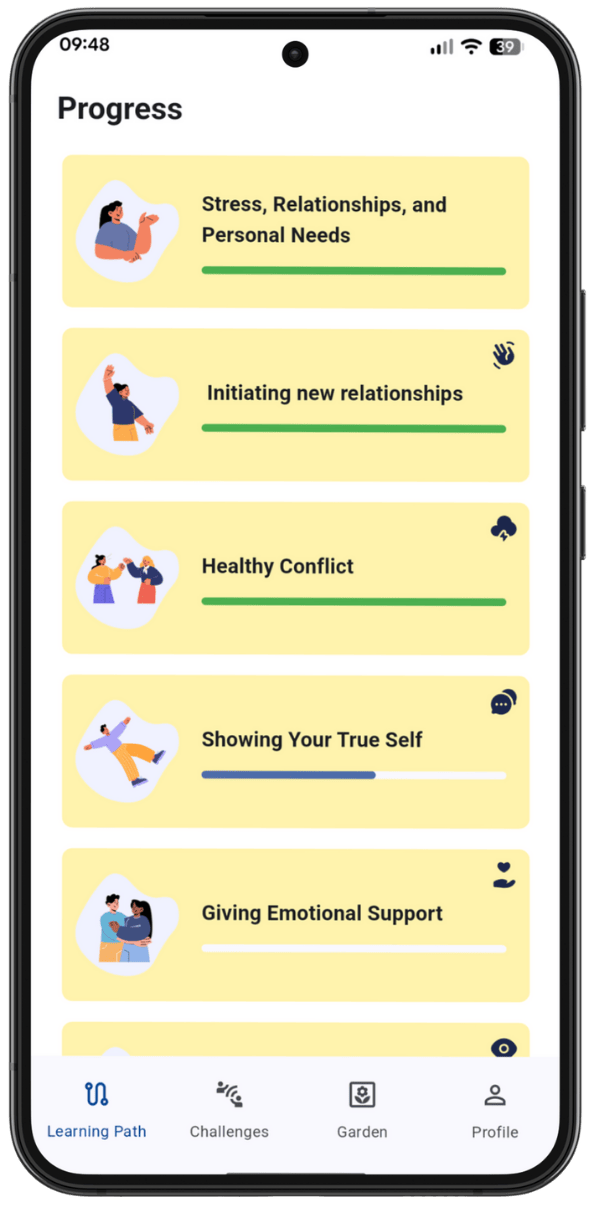
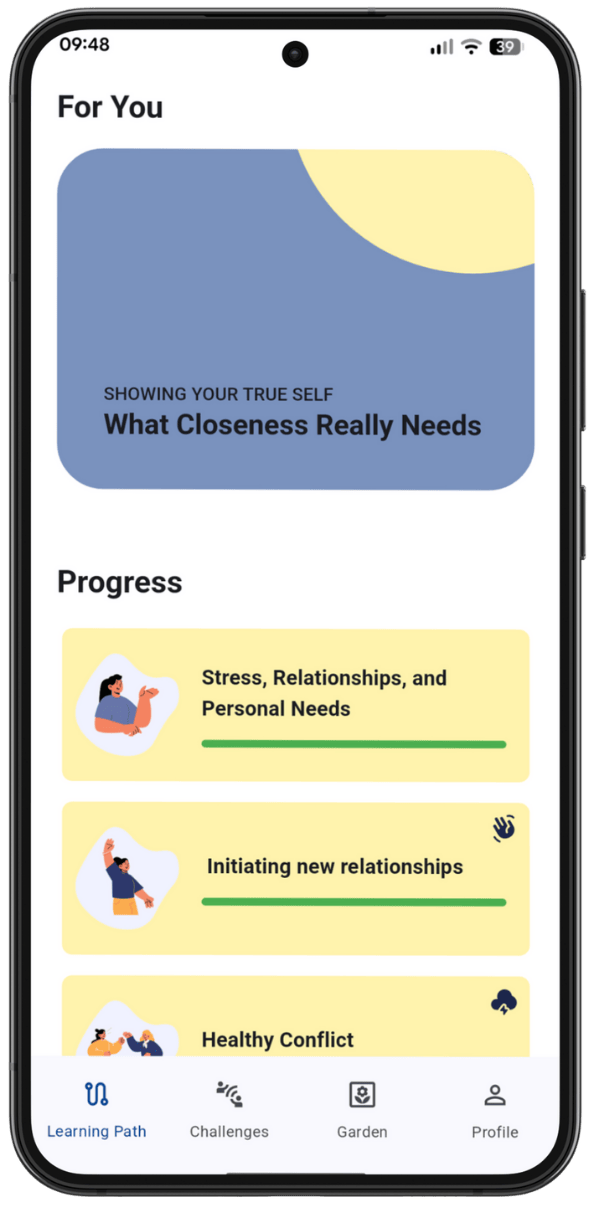
42 learning units, reflection exercises and challenges
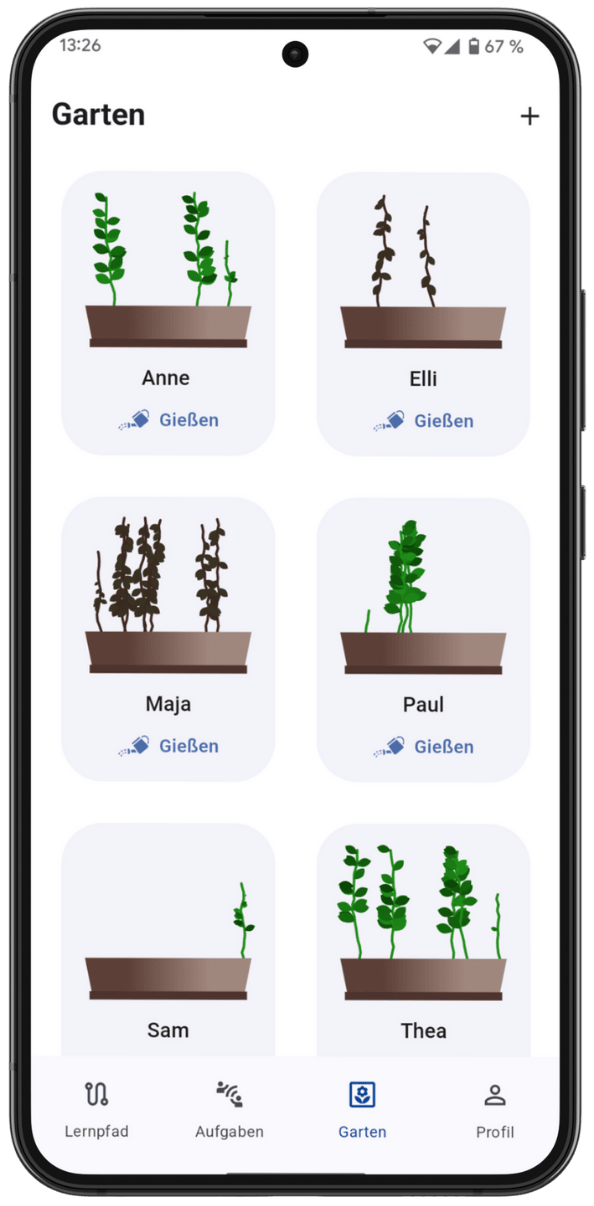
Nurture your relationships like plants. See which ones are flourishing and which need more care.
Someone’s there when things get tough.
In a completely free 15-minute conversation with our psychologist Dr. Silvan Hornstein, you can ask all the questions on your mind without obligations.
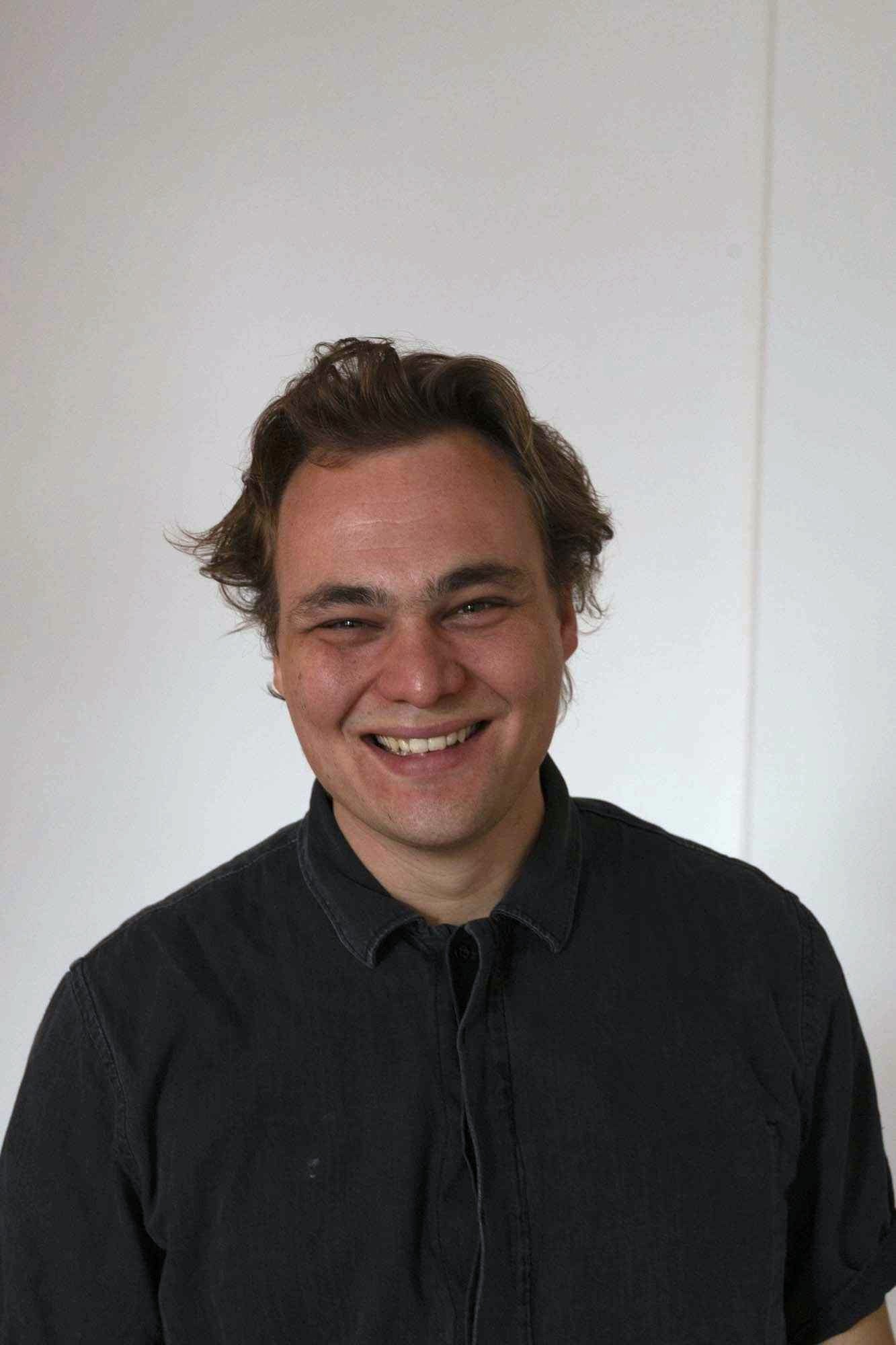
"I wish for a society where social health is promoted just as naturally as physical or mental health."
As psychologist with a PhD (Oxford University, HU Berlin, FU Berlin), Silvan understands the mechanisms behind loneliness. He developed the course content for platoniq, together with feedback from hundreds of affected individuals, to close the gap between science and everyday life.


Curious but not quite sure yet? Here's the fine print.
Loneliness doesn’t just disappear on its own. It begins to dissolve when you start truly understanding yourself and others.
In 6 weeks, you’ll learn: how closeness develops, how to break old patterns, and how to build relationships that last.
You don’t need any prior knowledge, just the willingness to grow, step by step.